
Dead Quiet00
Eight tools from our mastering room. One job each. Open any tile for the details.
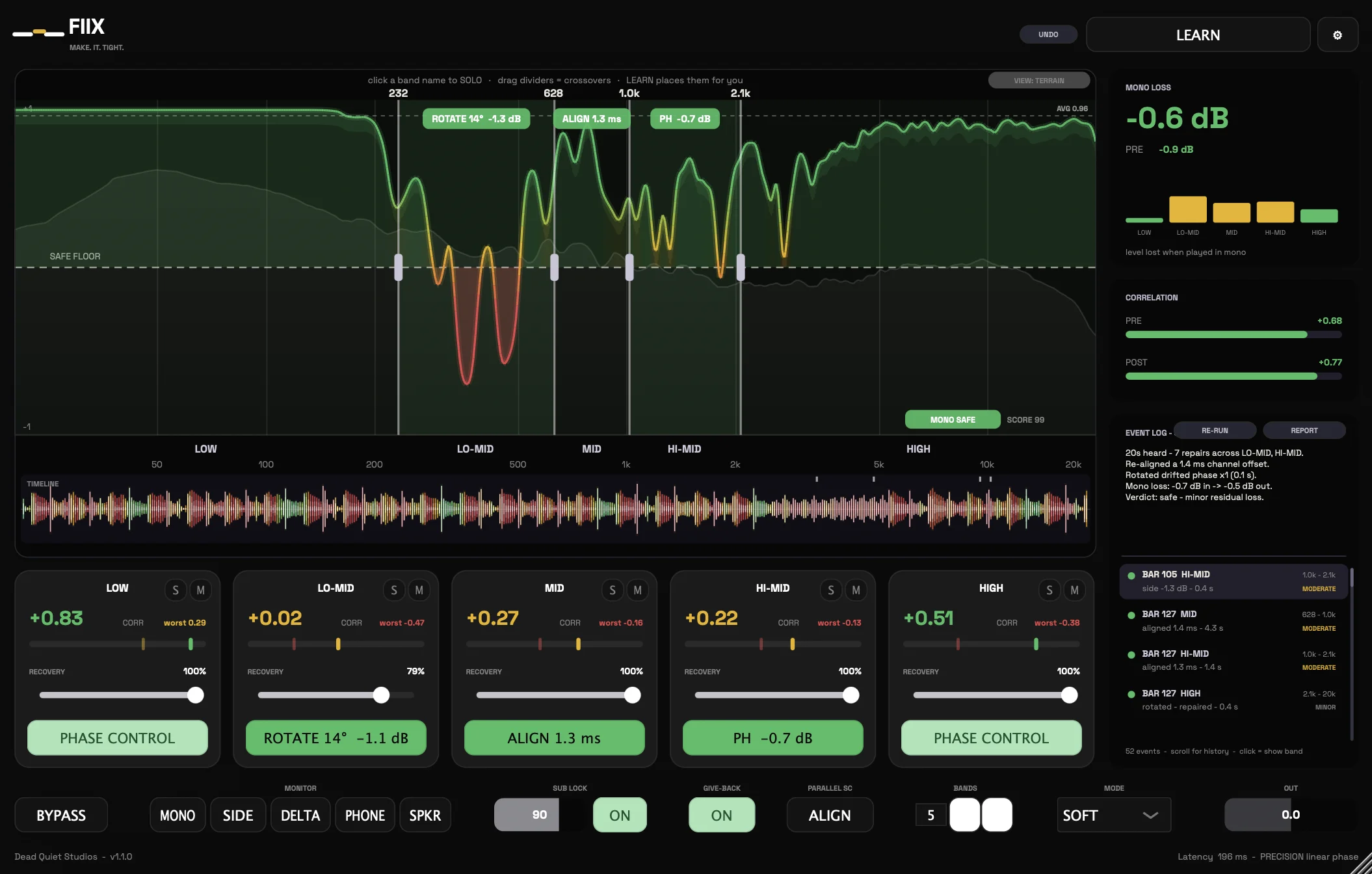
Best for mixes that fall apart in mono.
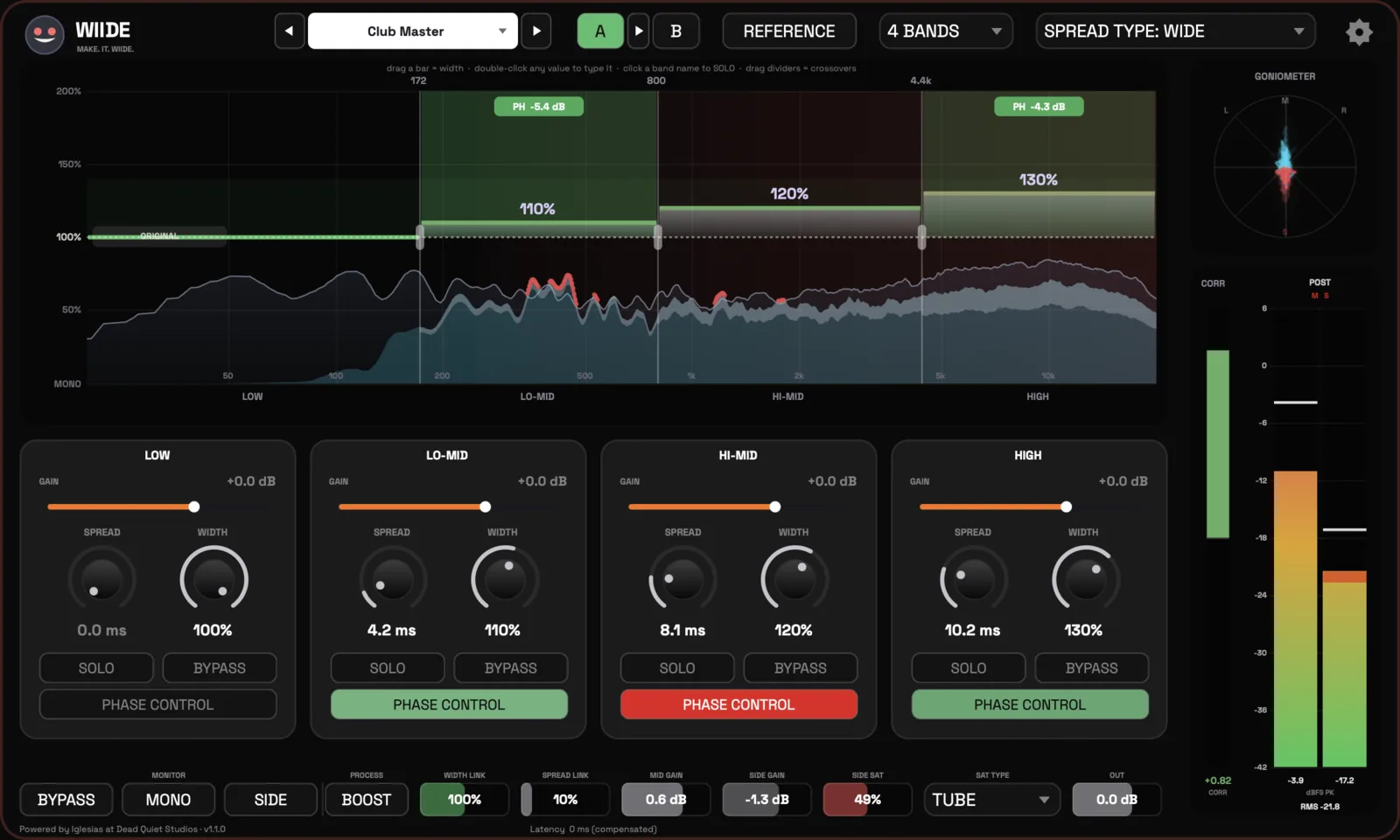
Best for width that survives mono.
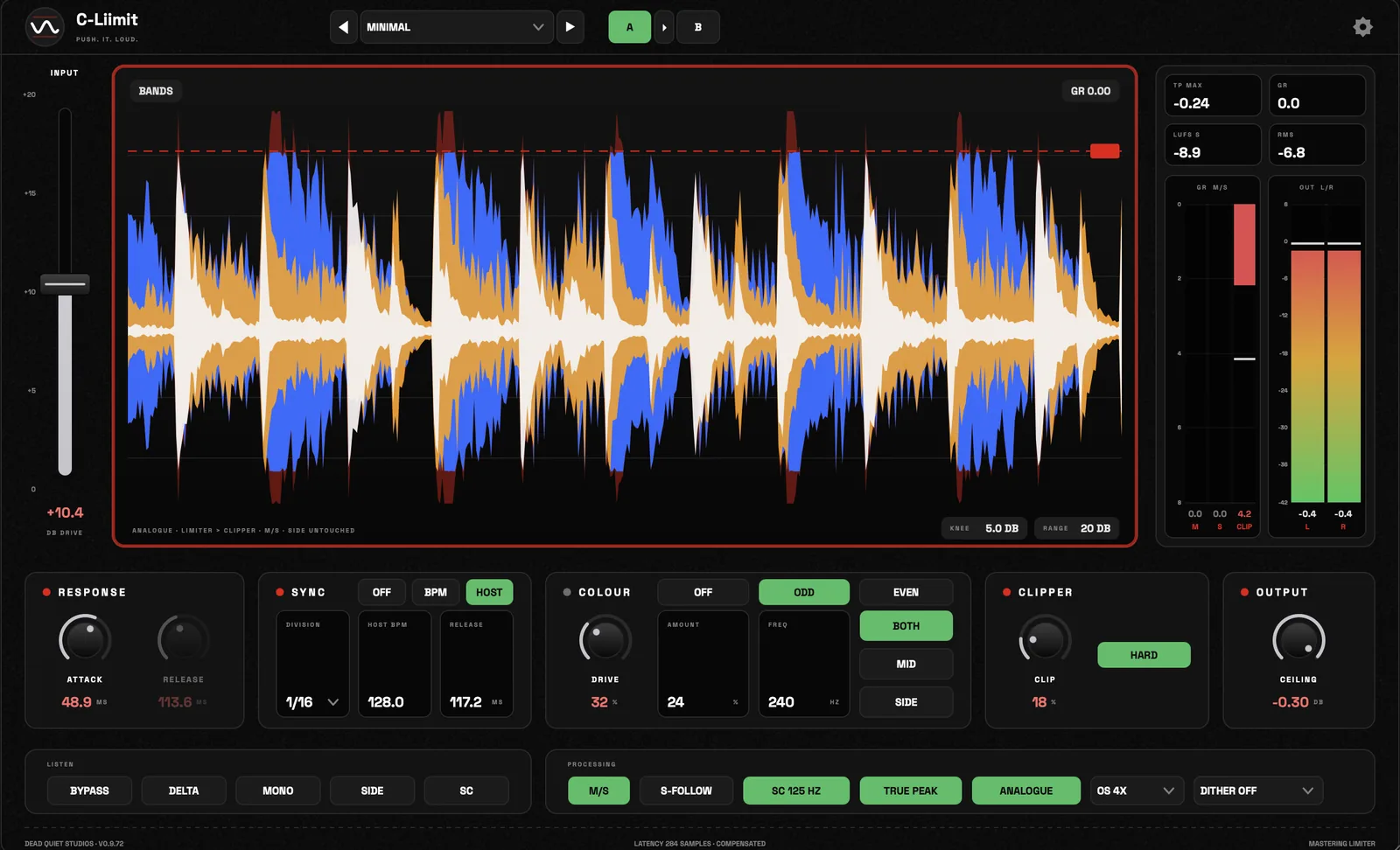
Best for the last stage before delivery.
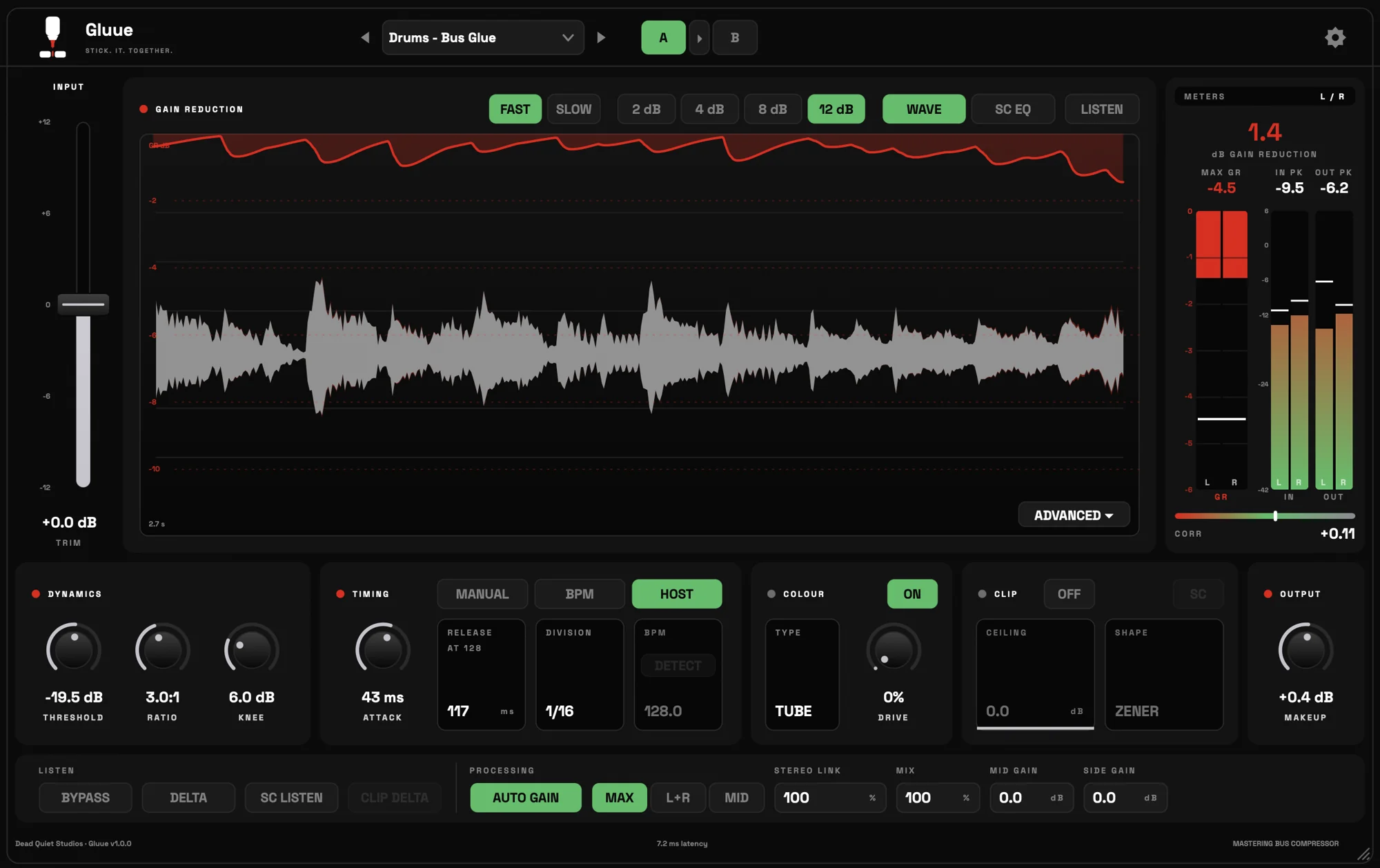
Best for a master that does not sit together.
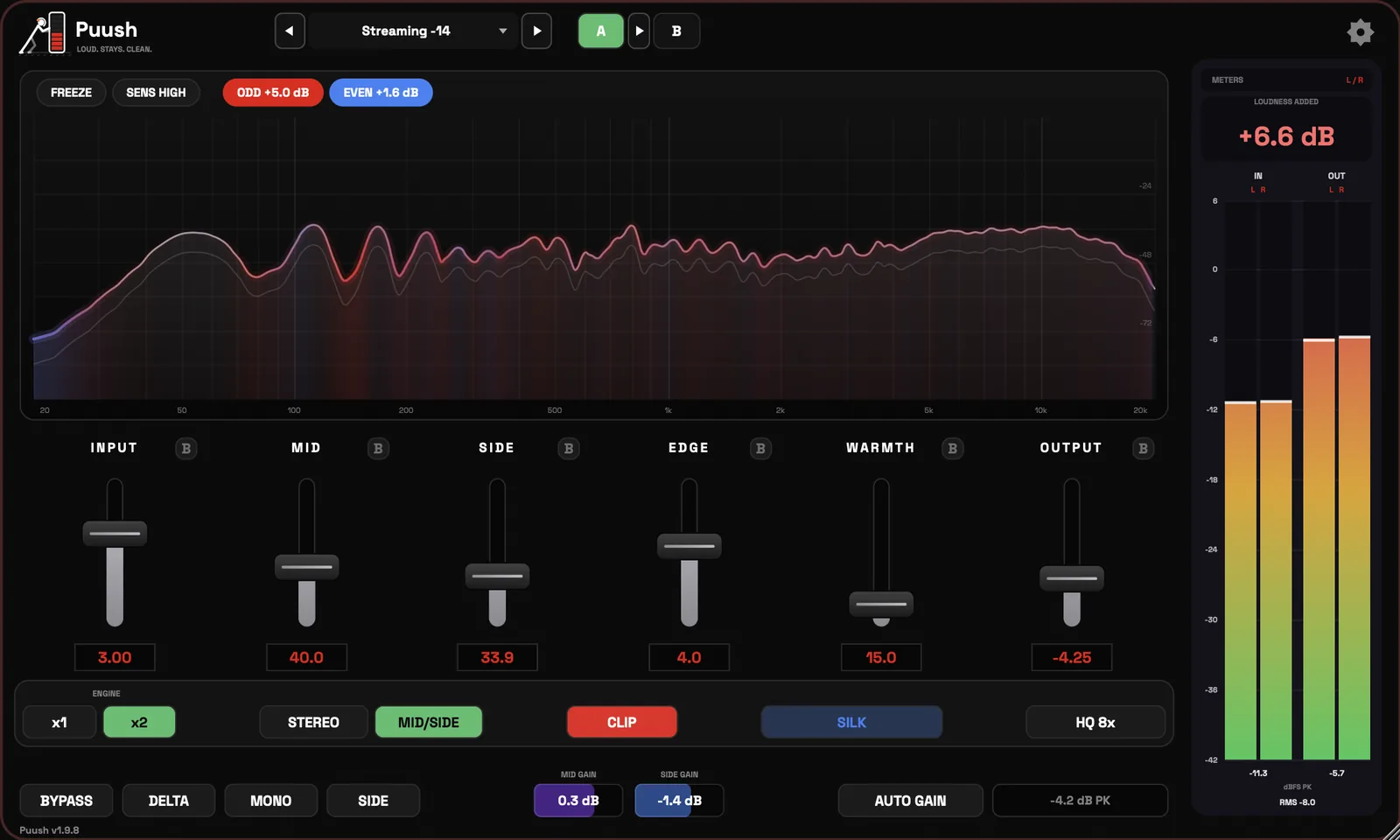
Best for loudness without touching the peaks.
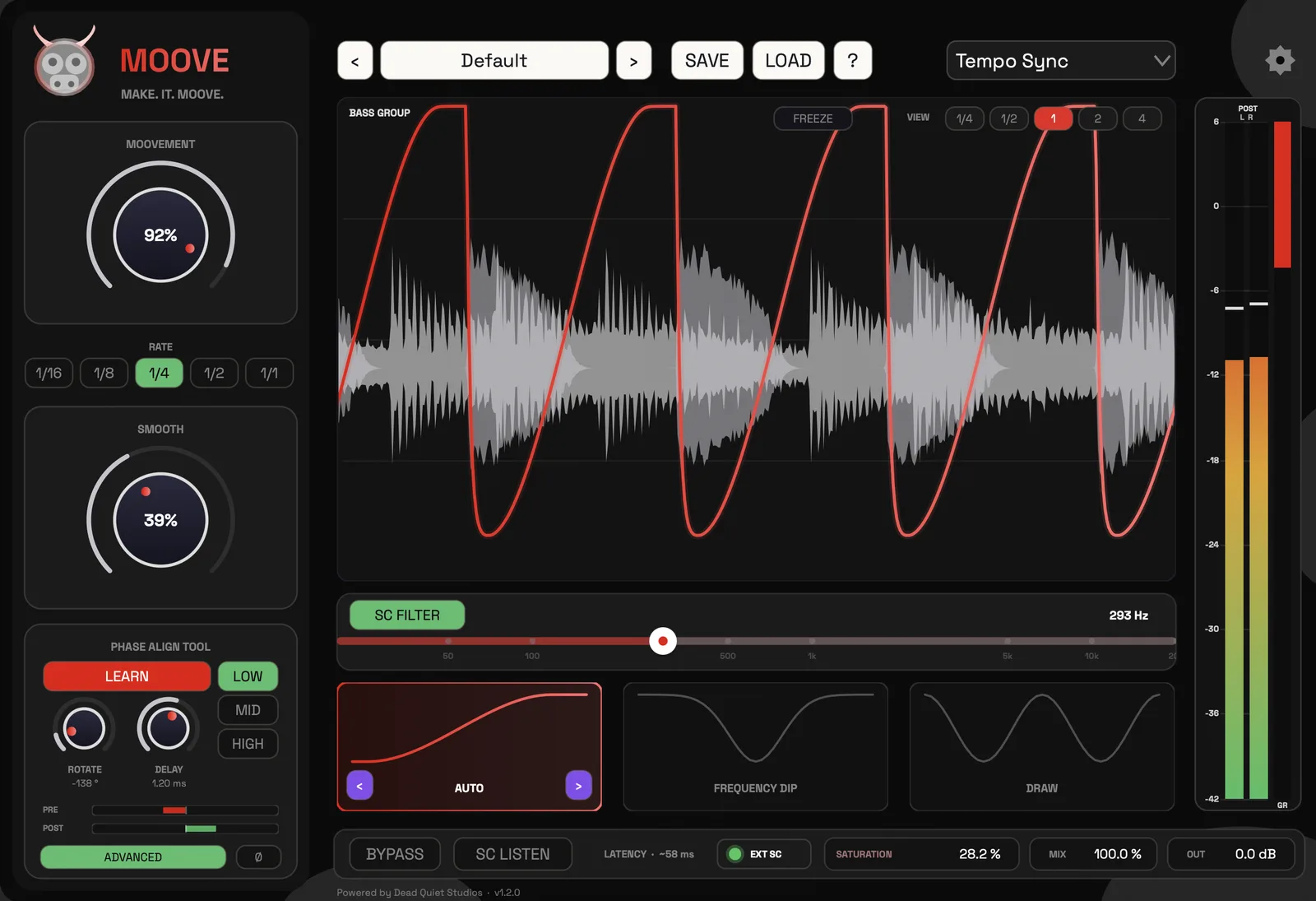
Best for kick and bass that fight.
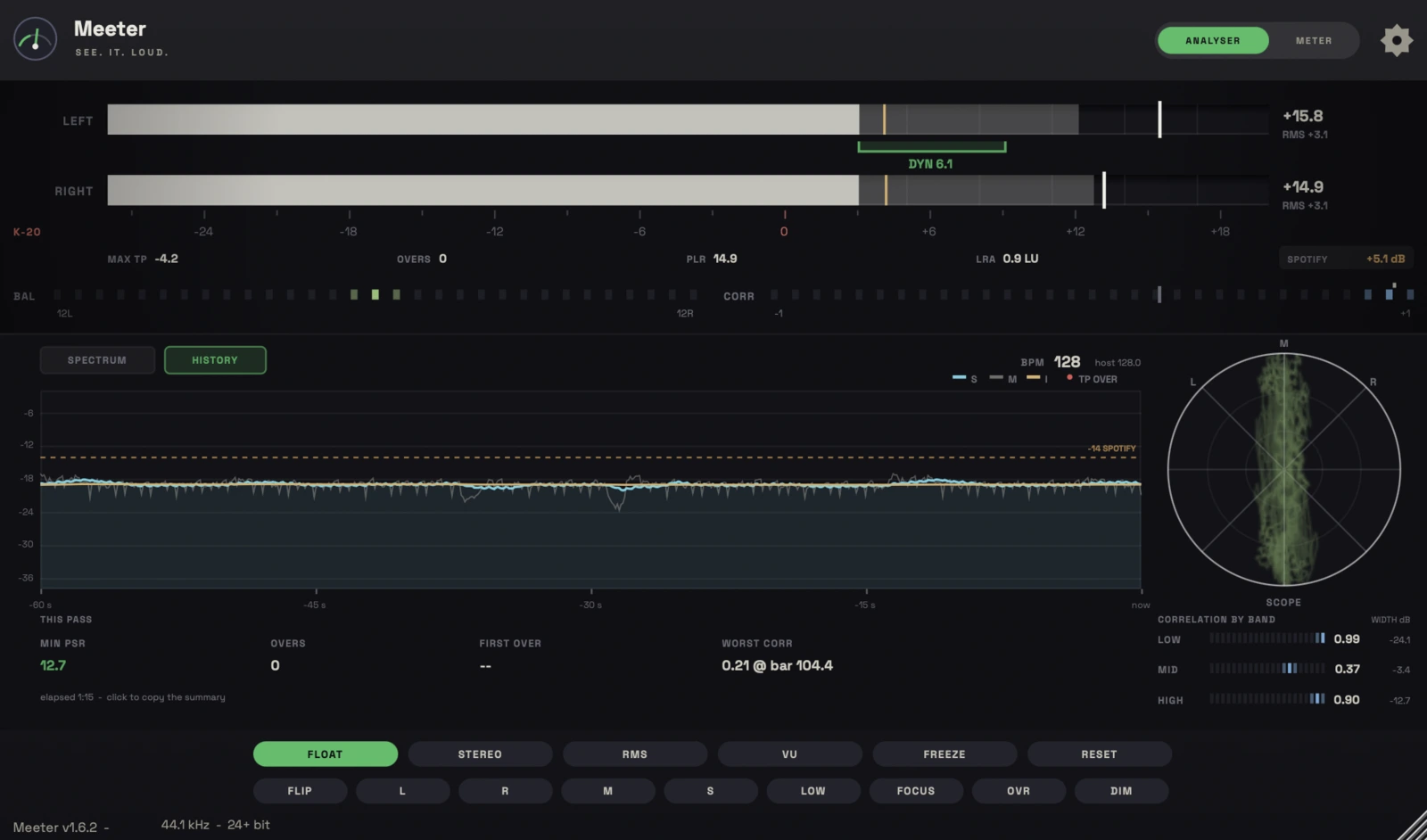
Best for reading a master without touching it.
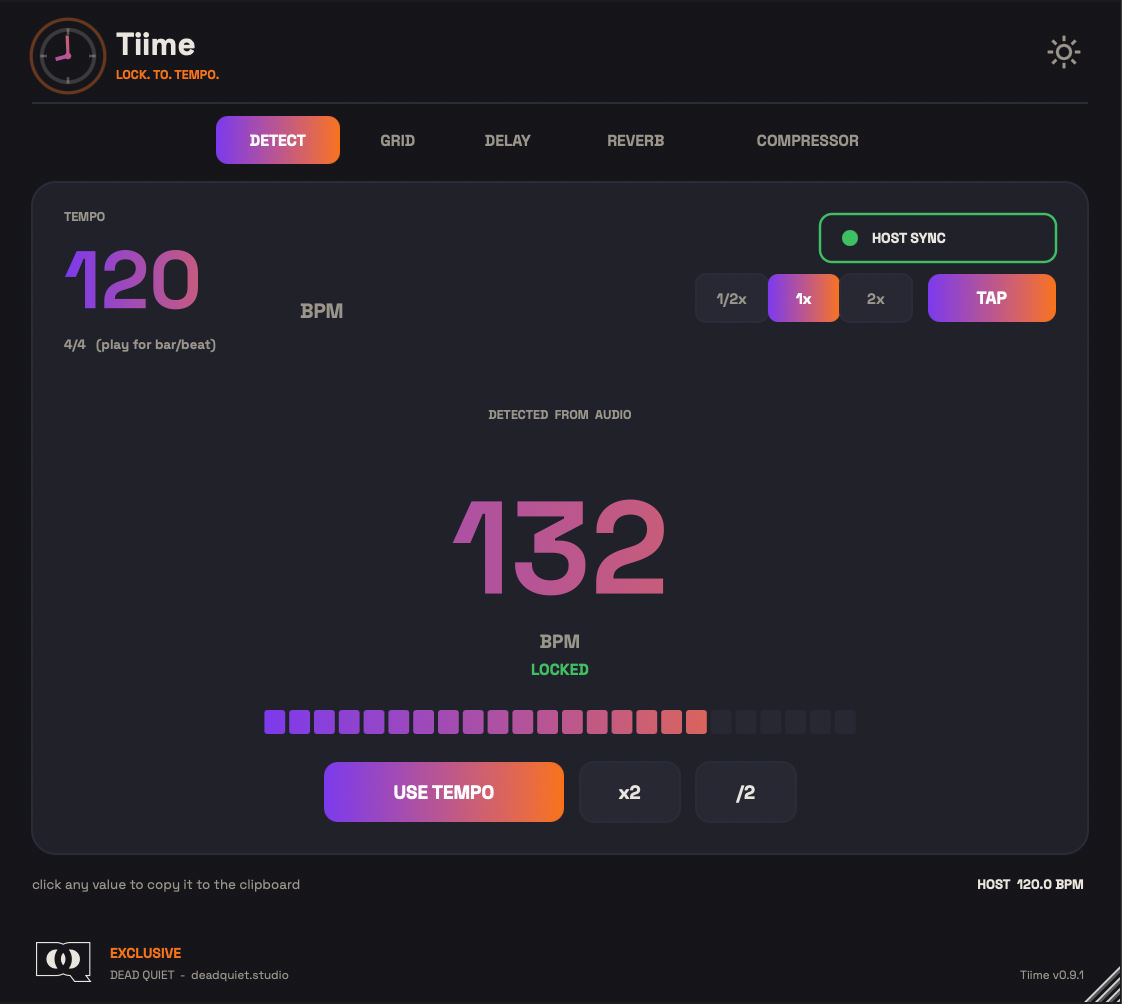
Best for delays that sit on the grid.
The studio chain as a Mac app. Hear the full master free, pay only to export. Rendered on your Mac, never uploaded.
Download freeLifetime updates · two activations · free demos · AU and VST3 on macOS and Windows
Every future version lands in your account, free.
Studio desktop and laptop. Move the licence when you need to.
The whole plugin in your own session before you buy. The new ones run for 3 days.
Native on macOS, Apple Silicon and Intel, and on Windows 64-bit.
Pick the job your record is failing at. Try that plugin free. Buy it when it has earned its place.
Huge in the studio. Still there on a phone.
Fiix listens, finds where the mix cancels in mono and repairs it in real time. No thresholds, no angles. One button per band.
Go wide without wrecking your mono.
Four bands. Widen, thicken and image each one on its own while the mono sum stays exactly where it was.
True-peak limiting that follows the track.
A release synced to the tempo, a clipper in front for the transients that do not need the limiter, MID and SIDE, and LUFS metering on the output so you ship to the number you meant.
Glue that matches its own level.
A mastering bus compressor with MID and SIDE compression, sidechain EQ, CLIP and COLOUR, and an AUTO GAIN that matches output to input and locks, so you judge the tone and not the volume.
Louder, not broken.
Lifts the quiet detail and adds smooth odd harmonics, so the sound sits louder and further forward while the peaks stay put.
Move anything out of the way.
Carves space for the kick, from a smooth tempo-synced pump to spectral carving that only dips the frequencies where kick and bass collide. Then it lines both up in phase.
Read the whole master at a glance.
Peak, RMS, VU, LUFS and true peak on one zero-latency rail that passes your audio through bit-identical. Beneath it, a spectrum, a loudness history, a goniometer and a BPM counter that reads the music itself.
Detect the tempo. Lock every delay to the grid.
Tap it or detect it from audio, then read off every delay, pre-delay and compressor time as a note value. Click any number to copy it.
